Companies across the investment industry are exaggerating their artificial intelligence capabilities to attract investors. The SEC calls this practice “AI washing” and has made it an enforcement priority. If you invested in a fund, product, or company that made false claims about using AI technology, you may have grounds for recovery.
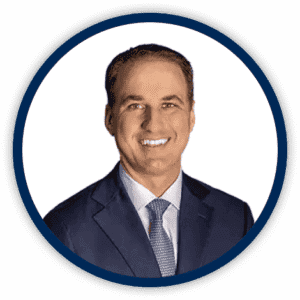
Gary Varnavides represents investors who suffered losses due to AI washing fraud. His prior defense-side work for broker-dealers gives him practical insight into how investment products are marketed and how to identify when AI claims cross the line from puffery into securities fraud.
Key Takeaways
- AI washing can support securities-fraud claims when material AI misrepresentations cause investor losses and the required reliance, loss causation, and scienter elements can be proven
- SEC has brought multiple enforcement actions against investment advisers and public companies for false AI claims
- Investor remedies may include FINRA arbitration for eligible broker-dealer disputes, private securities litigation, and regulatory complaints that support enforcement review but do not replace a damages claim
- Time limits apply – act quickly to preserve your legal options
- Free consultation available to evaluate your potential AI washing fraud claim
What is AI Washing?
AI washing occurs when companies make false or misleading statements about their use of artificial intelligence to attract investment or customers. SEC Chair Gary Gensler compared AI washing to “greenwashing,” where companies make misleading claims about environmental practices. With AI washing, the deception involves overstating, fabricating, or misrepresenting a company’s AI capabilities.
Common forms of AI washing include:
- Claiming to use proprietary AI technology when the company actually uses third-party software or human workers
- Overstating the automation level of AI systems
- Describing products as “AI-powered” when they rely primarily on manual processes
- Fabricating AI performance metrics and success rates
- Claiming AI credentials or capabilities that do not exist
When these false claims are made to investors in connection with the purchase or sale of securities, AI washing becomes securities fraud.
SEC Enforcement Actions Against AI Washing
The SEC has identified AI washing fraud as a top enforcement priority. According to the SEC’s March 2024 announcement, the agency brought its first AI washing enforcement actions to protect investors from misleading artificial intelligence claims. The SEC has brought several significant cases establishing that false AI claims violate federal securities laws.
Case Example: Delphia and Global Predictions (March 2024)
For example, the SEC’s first AI washing enforcement actions targeted two investment advisers. Delphia paid $225,000 for falsely claiming AI and machine learning capabilities from 2019-2023. Global Predictions paid $175,000 for claiming to be the “first regulated AI financial advisor” without substantiation.
Presto Automation (January 2025)
First AI washing case against a public company. Presto falsely claimed its restaurant technology used proprietary AI for drive-through orders when over 70% of orders required human intervention by offshore workers in the Philippines and India.
Case Example: Nate Inc. / Albert Saniger (April 2025)
In another case, regulators and prosecutors alleged that a founder raised $42 million by claiming an AI-powered shopping app when transactions were manually processed by contractors. The SEC and Department of Justice filed parallel charges, and the criminal case remains subject to the ordinary presumption of innocence unless and until guilt is proven.
Ongoing SEC Priority
The SEC created the Cyber and Emerging Technologies Unit (CETU) in February 2025 specifically to combat AI-related fraud. The unit employs approximately 30 fraud specialists focused on protecting retail investors from AI washing schemes.
How AI Washing Harms Investors
Investors rely on accurate information when making investment decisions. When companies lie about their AI capabilities, investors suffer real harm:
| Type of Harm | How It Occurs | Examples |
|---|---|---|
| Inflated Valuations | False AI claims artificially inflate company valuations, causing investors to overpay | Nate Inc. raised $42M at inflated valuations based on fake AI capabilities |
| Misleading Performance Claims | Fabricated AI performance metrics create unrealistic return expectations | Global Predictions claimed 34% outperformance without supporting documentation |
| Hidden Operational Risks | Manual processes disguised as AI create undisclosed business risks | Presto’s 70% human intervention rate undermined its scalability claims |
| Total Investment Loss | Companies built on AI fraud often collapse when exposed | Nate ceased operations in January 2023, leaving investors with complete losses |
Warning: AI-misrepresentation cases are increasing, but not every inflated AI statement creates an individual damages claim. Varnavides Law focuses on investor claims, FINRA arbitration where the respondent is properly subject to FINRA’s forum, and private securities litigation where an investor lost money after relying on false AI claims.
Legal Grounds for AI Washing Claims
Investors harmed by AI washing fraud can pursue recovery under several legal theories:
Federal Securities Law Violations
- 15 U.S.C. § 78j(b) – Prohibits fraud in connection with the purchase or sale of securities
- Rule 10b-5 – Makes it unlawful to make false statements or omit material facts
- 15 U.S.C. § 77q(a) – A common SEC enforcement theory for fraud in the offer or sale of securities; private investor claims usually require a separate viable cause of action
Retail Investor Recommendation Claims
When a broker-dealer or associated person recommends an AI-branded security or investment strategy to a retail customer, Reg BI, 17 C.F.R. § 240.15l-1, may apply. Reg BI requires the broker to act in the retail customer’s best interest at the time of the recommendation, including disclosure, care, conflict-of-interest, and compliance obligations. For AI washing claims, this matters when the recommendation depended on overstated AI capabilities, hidden conflicts, or product risks the broker did not reasonably investigate.
Investment Advisers Act Violations
- 15 U.S.C. § 80b-6(2) – Prohibits investment advisers from engaging in fraudulent conduct, but private damages remedies under the Advisers Act are limited and must be evaluated separately from SEC enforcement theories
- Marketing Rule violations – False AI claims in adviser marketing materials can support regulatory scrutiny and may be evidence in a related investor claim
- Compliance Rule failures – Inadequate policies may support supervision and compliance theories, but they do not automatically create an individual right to recover damages
State Law Claims
- State securities fraud statutes
- Common law fraud
- Negligent misrepresentation
- Breach of fiduciary duty
Types of AI Washing Schemes
AI washing fraud takes many forms across the investment industry. Understanding these schemes helps investors identify potential claims.
Investment Adviser AI Washing
Registered investment advisers claiming AI-driven portfolio management when using conventional methods. May include false claims about algorithmic trading, AI-based risk assessment, or automated investment selection.
Startup AI Washing
Private companies raising capital by overstating AI capabilities. Often involves fabricated demonstrations, fake automation rates, and hidden manual operations. Targets venture capital, private equity, and individual investors.
Public Company AI Washing
Publicly traded companies making false AI disclosures in SEC filings, press releases, and investor presentations. These facts may support SEC enforcement or private securities claims, but Varnavides Law focuses on individual investor representation.
Fintech AI Washing
Financial technology companies claiming AI powers their platforms when human workers perform most functions. Common in robo-advisers, trading apps, and financial planning platforms.
Fund AI Washing
Mutual funds, hedge funds, and ETFs claiming AI-driven investment strategies without actual AI implementation. Investors pay premium fees for supposedly sophisticated AI that does not exist.
Product AI Washing
Companies selling AI-branded investment products that lack genuine AI capabilities. May involve false claims about machine learning algorithms, predictive analytics, or automated decision-making.
SEC’s Cyber and Emerging Technologies Unit
In February 2025, the SEC announced the creation of the Cyber and Emerging Technologies Unit (CETU) to combat AI-related fraud. This dedicated enforcement unit signals the SEC’s commitment to protecting investors from AI washing schemes.
CETU Priority Areas: The unit focuses on fraud committed using emerging technologies including artificial intelligence and machine learning, use of social media and false websites to perpetrate fraud, and cybersecurity-related misconduct affecting retail investors.
CETU is led by Laura D’Allaird, former co-chief of the Crypto Assets and Cyber Unit. The unit employs approximately 30 fraud specialists and attorneys dedicated to AI-related enforcement actions.
Warning Signs of AI Washing
Investors should watch for these red flags that may indicate AI washing fraud:
- Vague AI claims without specific details about how the technology works
- Extraordinary performance claims attributed to AI without verifiable track records
- Resistance to technical due diligence or inability to demonstrate AI systems
- Inconsistent descriptions of AI capabilities across different materials
- No technical expertise on the management team despite AI-centric positioning
- Claims that sound too good to be true regarding automation or accuracy rates
- Heavy marketing focus on AI buzzwords without substance
How Varnavides Law Helps AI Washing Victims
Varnavides Law brings a defense-side perspective to AI washing fraud cases. That background helps the firm understand how investment products are structured, marketed, and sold, and how AI claims can cross from aggressive marketing into investment fraud.
Case Evaluation
- Review investment materials and AI claims
- Analyze disclosure documents for misrepresentations
- Identify violations of federal and state securities laws
- Assess potential damages and recovery options
Strategic Approach
- Determine the proper forum for an individual claim, including FINRA arbitration or private securities litigation
- Build evidence of false AI claims and investor reliance
- Calculate actual damages from investment losses
- Pursue available recovery through litigation, arbitration, or settlement based on the facts and governing forum
Credentials and Experience
The firm is led by a securities attorney recognized as a Super Lawyers Rising Star from 2015-2023 and licensed in California and New York.
Your Legal Options for AI Washing Claims
Investors harmed by AI washing fraud have several paths to potential recovery:
| Option | Best For | Typical Timeline |
|---|---|---|
| FINRA Arbitration | Claims against FINRA member broker-dealers or associated persons when FINRA Rule 12200 and the account agreement support the forum | 12-18 months |
| Regulatory Complaint | Reporting fraud to the SEC or FINRA; useful for enforcement review but not a substitute for an individual recovery claim | Varies based on SEC investigation |
| Individual Lawsuit | Direct claims against companies and individuals for securities fraud | 18-36 months |
| Individual Securities Litigation | Claims against issuers, officers, advisers, or other non-FINRA parties when a private cause of action and damages theory are available | Depends on court, parties, and case complexity |
Time Limits for Filing
Statutes of limitations and repose apply to AI washing fraud claims. Acting quickly is essential to preserve your legal rights:
- Federal securities-fraud claims: 2 years from discovery, 5 years from violation
- Securities offering claims: 15 U.S.C. § 77l(a)(1) applies to unregistered securities sales, while 15 U.S.C. § 77l(a)(2) addresses material misstatements or omissions in a prospectus or oral communication; 15 U.S.C. § 77q(a) is primarily an SEC enforcement tool rather than a standalone private recovery claim
- FINRA arbitration: Rule 12206 is a six-year eligibility rule, not a statute of limitations, and it does not extend shorter court filing periods
- State law claims: Vary by state, typically 2-4 years
Important: The statute of limitations begins running when you discover or should have discovered the fraud. Do not delay in seeking legal advice if you suspect you were misled by false AI claims.
What to Expect in an AI Washing Case
Understanding the legal process helps set realistic expectations:
Investigation Phase
Your attorney will gather and analyze investment materials, marketing documents, SEC filings, and other evidence of false AI claims. This includes comparing stated AI capabilities against actual operations.
Claim Filing
Depending on the forum, your attorney will file a FINRA arbitration demand, federal or state court complaint, or related regulatory complaint. A regulatory complaint can support enforcement review, but an investor seeking damages usually needs a separate arbitration or court claim that details the false AI statements, reliance, loss causation, and resulting damages.
Discovery
Both sides exchange documents and take depositions. In AI washing cases, discovery often reveals internal communications showing the company knew its AI claims were false.
Resolution
Most cases settle before trial or hearing. If not, the case proceeds to arbitration hearing or trial where a decision-maker determines liability and damages.
Frequently Asked Questions About AI Washing Fraud
What is AI washing in securities law?
AI washing occurs when companies make false or misleading statements about their use of artificial intelligence to investors. In securities law, this becomes fraud when the false AI claims are material to investment decisions and cause investor losses. The SEC has identified AI washing as a top enforcement priority and has brought multiple cases against investment advisers and public companies for making false AI claims.
How do I know if I was a victim of AI washing fraud?
You may be a victim of AI washing fraud if you invested in a company or fund that prominently featured AI capabilities in its marketing, the company’s actual AI capabilities were significantly less than represented, and you suffered losses as a result. Warning signs include vague AI claims without technical specifics, extraordinary performance attributed to AI, and later revelations that human workers performed tasks claimed to be automated.
What damages can I recover in an AI washing case?
Damages in AI washing cases typically include your actual investment losses – the difference between what you paid and the value you received. You may also recover consequential damages, interest, and in some cases attorneys’ fees. The specific damages available depend on the legal theory and forum you pursue.
Should I file with FINRA or in federal court?
The appropriate forum depends on who made the false AI claims and what agreement governs the account. FINRA arbitration is typically available for disputes with FINRA member broker-dealers or associated persons that meet FINRA Rule 12200 requirements. Claims against standalone investment advisers, issuers, officers, or non-FINRA entities generally require separate forum analysis and may proceed in federal or state court.
How long do I have to file an AI washing claim?
Time limits vary by claim type. Federal securities-fraud claims generally have a two-year discovery period and a five-year outer limit. FINRA Rule 12206 is a six-year arbitration eligibility rule, not a statute of limitations, and state law claims vary. Consulting an attorney promptly helps ensure you do not miss applicable deadlines.
What evidence do I need for an AI washing case?
Key evidence includes marketing materials and investor presentations showing AI claims, your investment documents, account statements showing losses, company disclosures and SEC filings, and any communications with the company about their AI capabilities. Your attorney can help identify and preserve relevant evidence through the discovery process.
Can I still file a claim if the company went bankrupt?
Yes, you may have claims against individuals responsible for the fraud, officers and directors who made false statements, auditors who failed to catch the fraud, or other parties with liability exposure. An attorney can evaluate all potential defendants and recovery sources for your claim.
What is the SEC’s CETU and how does it affect AI washing enforcement?
The Cyber and Emerging Technologies Unit (CETU) is an SEC enforcement division created in February 2025 specifically to combat AI-related fraud. CETU employs approximately 30 fraud specialists focused on protecting retail investors from AI washing and other emerging technology schemes. The creation of CETU signals increased SEC scrutiny of AI claims and more enforcement actions against companies that mislead investors about their AI capabilities.
Contact an AI Washing Securities Fraud Lawyer
If you invested based on claims about artificial intelligence that turned out to be false or exaggerated, you may have grounds for recovery. AI washing fraud is a serious violation of federal securities laws, and the SEC is actively pursuing enforcement actions against companies that mislead investors about their AI capabilities.
Varnavides Law offers free consultations to evaluate potential AI washing fraud claims. The firm can assess whether you have a viable claim and explain your options for recovery.
Free AI Washing Fraud Consultation
Were you misled by false AI claims? Contact Varnavides Law to discuss your potential case and learn about your legal options.
Varnavides Law offers a free consultation. Fee arrangements vary by matter and are discussed during consultation.
You remain responsible for case costs, which may include filing fees, expert witnesses, and deposition transcripts. We can discuss cost estimates and payment arrangements during your consultation.