When a brokerage firm fails to oversee its brokers, investors pay the price. FINRA Rule 3110 requires every member firm to establish and maintain a supervisory system reasonably designed to achieve compliance with applicable securities laws and regulations. When that system is deficient, ignored, or undermined — and a broker causes investor harm as a result — the firm shares liability for those losses.
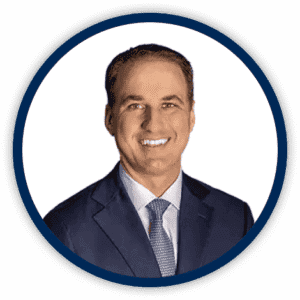
At Varnavides Law, PC, we represent investors throughout California and, in FINRA arbitration proceedings, nationwide, who have been harmed by negligent brokerage firm oversight. Gary Varnavides now applies claimant-side knowledge built over years of securities litigation experience — representing investors against the same brokerage firms and the same defense counsel arguments he knows well from the other side.
Key Takeaways
- Firms share liability: Brokerage firms bear legal responsibility for supervising their registered representatives under FINRA Rule 3110 and federal securities law. When that duty fails, the firm can be held accountable alongside the individual broker.
- Four required elements: A failure to supervise claim requires an underlying securities violation, an association between the broker and the firm, supervisory jurisdiction over the conduct, and a demonstrable failure to reasonably supervise.
- FINRA arbitration is the primary forum: Most investor disputes with broker-dealers are resolved through FINRA arbitration, not federal or state court. Understanding how the arbitration process works is central to building a viable claim.
- Six-year forum-eligibility period: Under FINRA Rule 12206, claims must be filed within six years of the occurrence or event giving rise to the dispute. This is a forum-eligibility rule, not a statute of limitations — separate state and federal time limits may also apply.
- Minimum losses threshold: We evaluate cases where investors have sustained substantial losses. Schedule a free consultation to discuss whether your situation meets the threshold for a viable claim.
What Is Failure to Supervise in Securities Law?
Failure to supervise occurs when a brokerage firm neglects its legal obligation to monitor and control the activities of its registered representatives and other associated persons. The duty is not optional or aspirational — it is codified in FINRA Rule 3110 and reinforced by federal securities law. When supervision is inadequate, brokers can churn accounts, recommend unsuitable investments, engage in unauthorized trading, or commit outright fraud, often for months or years before anyone within the firm notices — or admits to noticing.
The federal statutory basis for supervising securities personnel is found in the Exchange Act § 15(b)(4)(E) (15 U.S.C. § 78o(b)(4)(E)), which authorizes the SEC to sanction any broker-dealer that fails to reasonably supervise, with a view to preventing violations, a person subject to its supervision who commits a securities violation. FINRA Rule 3110 operationalizes this obligation for FINRA member firms by specifying what a compliant supervisory system must include.
What Firms Are Required to Supervise
- All securities transactions and investment recommendations
- Customer account suitability and trading patterns
- Communications between brokers and clients
- Outside business activities of registered representatives
- Broker credentials, disciplinary history, and prior complaints
- Electronic communications and order tickets
How Supervision Systems Fail
- Ignoring automated exception reports and trading alerts
- Deficient or outdated written supervisory procedures
- Inadequate compliance staffing and training
- Failure to investigate or escalate customer complaints
- Overlooking a broker’s prior disciplinary history during hiring
- Inadequate branch office oversight and inspection cycles
FINRA Rule 3110: The Supervisory Obligation
FINRA Rule 3110 (Supervision) is the primary regulatory framework governing broker-dealer supervisory obligations. The rule requires each member firm to establish and maintain a system to supervise the activities of each associated person that is reasonably designed to achieve compliance with applicable securities laws and regulations, and with applicable FINRA rules. Critically, the standard is not strict compliance — it is reasonable design and implementation. Firms that have a supervisory system on paper but fail to enforce it in practice do not satisfy the rule.
Under Rule 3110, every FINRA member firm must implement and maintain the following supervisory components:
| Component | What Rule 3110 Requires | Why It Matters for Investors |
|---|---|---|
| Written Supervisory Procedures (WSPs) | Documented policies covering each line of business, required under FINRA Rule 3110(b)(1) | Establishes the standard against which firm conduct is measured in arbitration |
| Designated Supervisory Principals | Registered principals assigned specific supervisory authority over associated persons | Identifies who was responsible — and who failed — when misconduct goes undetected |
| Annual Compliance Review | Yearly assessment of whether the supervisory system is functioning effectively | Creates a documented record of known gaps that can become evidence of notice |
| Branch Office Inspections | Regular and surprise inspections of registered locations | Demonstrates whether the firm was actively overseeing remote or satellite offices |
| Exception Report Review | Monitoring of automated surveillance alerts for unusual trading or account activity | Reveals whether the firm had actual notice of red flags and chose not to act |
Remote Inspections: Rule Updated Effective July 1, 2024
FINRA amended Rule 3110 effective July 1, 2024, introducing a three-year Remote Inspections Pilot Program that permits qualifying firms to conduct certain branch office inspections remotely. The amendment does not reduce the substantive supervisory obligations Rule 3110 imposes — it modifies the method of inspection for eligible locations during the pilot period. Firms that abuse the remote inspection option to avoid oversight of problematic branches may still be held to the same reasonableness standard.
The Four Elements of a Failure to Supervise Claim
To pursue a failure to supervise claim successfully in FINRA arbitration, a failure to supervise lawyer must establish four elements. Each must be supported by evidence drawn from the firm’s own compliance records, account documentation, and supervisory files.
Element 1: An Underlying Securities Violation
A failure to supervise claim does not stand alone — it requires an underlying act of misconduct by an associated person. Common underlying violations in failure to supervise cases include:
- Churning and excessive trading in violation of FINRA Rule 2111’s quantitative suitability prong
- Unauthorized trading — executing transactions without customer authorization
- Unsuitable investment recommendations under FINRA Rule 2111 (reasonable-basis and customer-specific suitability)
- Breach of fiduciary duty or breach of the best-interest standard (for broker-dealers under post-2020 standards)
- Misrepresentation or omission of material facts in violation of SEC Rule 10b-5
- Selling away — private securities transactions outside the firm’s supervision under FINRA Rule 3280
- Elder financial exploitation and targeting of vulnerable investors
Element 2: Association Between the Broker and the Firm
The broker who committed the underlying violation must have been associated with the respondent brokerage firm at the time of the misconduct. Under FINRA Rule 12100(b), an associated person includes any natural person engaged in the investment banking or securities business who is directly or indirectly controlled by a FINRA member firm. This definition is broad and covers brokers, financial advisors, and other registered personnel regardless of employment classification.
Element 3: Supervisory Jurisdiction
The firm must have had supervisory jurisdiction over the broker and over the specific activities that caused the investor’s losses. Firms cannot escape liability by asserting they did not know what a broker was doing — the question is whether the firm had the authority and responsibility to oversee that conduct, not whether it chose to exercise that authority.
Element 4: Failure to Reasonably Supervise
The most contested element is whether the firm’s supervision was actually unreasonable under the circumstances. Evidence supporting this element typically includes:
- Exception reports or compliance alerts that were generated but never acted upon
- Written supervisory procedures that were deficient, outdated, or inapplicable to the actual business being conducted
- The firm’s own failure to enforce its written procedures
- Compliance department understaffing or inadequate training relative to the firm’s supervisory obligations
- Customer complaints about the same broker that were dismissed or inadequately investigated before the harm at issue
- A broker’s prior disciplinary history that the firm failed to account for during hiring or retention decisions
Suitability Standards and Best-Interest Supervision
Many failure to supervise claims involve underlying violations of FINRA Rule 2111 (Suitability) or Regulation Best Interest (Reg BI, 17 C.F.R. §240.15l-1). Understanding the distinction between these standards matters when building a supervision claim, because the supervisory obligation extends to the standard applicable at the time of the conduct.
FINRA Rule 2111 imposes three distinct suitability sub-obligations: reasonable-basis suitability (the recommended product or strategy must be suitable for at least some investors), customer-specific suitability (the recommendation must be suitable for this particular customer based on their investment profile), and quantitative suitability (a series of recommendations must not be excessive in aggregate even if each individual trade appears reasonable). Supervision failures that allow a broker to systematically violate any of the three sub-obligations are recoverable through the failure to supervise theory.
Reg BI (17 C.F.R. §240.15l-1), effective June 30, 2020, established a distinct best-interest standard for broker-dealers recommending securities transactions to retail customers — qualitatively different from the prior suitability standard. Under Reg BI, a broker-dealer must act in the retail customer’s best interest at the time of the recommendation, without placing the firm’s or broker’s financial interests ahead of the customer’s. Reg BI imposes four component obligations: a disclosure obligation, a care obligation, a conflict-of-interest obligation, and a compliance obligation. Supervisory systems must now be reasonably designed to achieve compliance with Reg BI for retail customer recommendations. Supervisory failures that allow Reg BI violations are recoverable through the same failure to supervise framework.
The Difference Between Broker-Dealers and Investment Advisers
Reg BI governs broker-dealers at the point of recommendation. Registered Investment Advisers (RIAs) registered under the Investment Advisers Act of 1940 owe a continuous fiduciary duty under Advisers Act § 206 (15 U.S.C. § 80b-6) — a continuous fiduciary duty — a qualitatively different obligation that applies throughout the advisory relationship, not only at the moment of a transaction. When an investment professional serves in both roles, the applicable standard may differ depending on which hat they were wearing at the time of the alleged misconduct. This distinction affects both the theory of the underlying violation and the supervisory obligation that applies to it.
Types of Supervisory Failures: Common Patterns
Supervisory failures cluster into identifiable categories. The following patterns appear repeatedly in FINRA investor claims and are among the most useful in establishing firm liability.
Failure to Monitor Trading Activity and Exception Reports
Firms operate automated surveillance systems that generate exception reports when account activity falls outside defined parameters — high turnover ratios, concentrated positions, unusual commission levels, accounts that diverge significantly from stated investment objectives. These systems exist precisely to detect the kinds of misconduct that generate investor claims. When supervisors fail to review exception reports, dismiss flagged accounts without investigation, or fail to escalate concerning patterns to compliance management, the firm has failed in the most direct possible way: it had notice of potential misconduct and chose not to act.
Failure to Vet Broker Background
Before hiring a registered representative and throughout that representative’s employment, firms must review credentials and disciplinary history through FINRA BrokerCheck. Hiring or retaining a broker with a history of customer complaints, regulatory actions, or prior terminations for cause without implementing heightened supervisory procedures is a supervisory failure. The firm’s decision to profit from a broker’s production while ignoring risk signals in that broker’s history is strong evidence of unreasonable supervision.
Inadequate Investigation of Customer Complaints
Customer complaints are the most direct form of supervisory notice available to a brokerage firm. When a firm fails to properly investigate complaints, dismisses them without analysis, or allows a broker who has drawn multiple complaints to continue the same practices, that conduct pattern becomes critical evidence in a failure to supervise claim. The fact that the firm received prior notice of the problematic broker — and failed to respond — often converts what might otherwise be a single-transaction dispute into a much stronger firm-liability case.
Failure to Supervise Outside Business Activities
FINRA Rule 3270 requires registered representatives to provide their employing firm with prior written notice before engaging in any outside business activity for compensation. FINRA Rule 3280 governs the supervision of private securities transactions — so-called “selling away” — where a broker sells investment products outside the firm’s approved product list and without firm supervision. When firms fail to require proper disclosure, fail to investigate outside activities, or fail to implement supervisory controls over private securities transactions they approve, they can be held liable when those activities harm investors.
Selling Away: High Risk, Often Hidden
Selling away involves a broker recommending or selling investments that are not offered through the broker’s firm — often private placements, promissory notes, or other unregistered securities. Because these transactions occur outside the firm’s formal product and supervisory infrastructure, investors frequently do not understand they are exposed to risks the firm has no obligation to have vetted. When a firm knew or should have known that its broker was engaged in selling away and failed to investigate or supervise that activity, the firm can face liability for the resulting losses even if it never received proceeds from the transactions.
FINRA Arbitration: The Primary Recovery Forum
Most failure to supervise claims against broker-dealers proceed through FINRA arbitration rather than state or federal court. Brokerage account agreements typically include mandatory arbitration clauses requiring all customer disputes to be resolved through FINRA arbitration. Even where no separate arbitration agreement exists, FINRA Rule 12200 permits customers to compel FINRA member firms into arbitration for claims arising in connection with the member’s business activities.
FINRA arbitration is a specialized forum with its own procedural rules, discovery standards, and timeline. Understanding how it operates — and how it differs from court litigation — is essential to building an effective supervision claim.
| Stage | Description | Typical Timeframe |
|---|---|---|
| Statement of Claim | Claimant’s attorney files the formal complaint with FINRA’s arbitration forum | Filing triggers the process |
| Respondent’s Answer | The brokerage firm responds to the allegations and asserts defenses | 45 days after service |
| Arbitrator Selection | Both parties rank and strike arbitrators from FINRA’s rosters through the Neutral List Selection System | 1–2 months |
| Discovery | Exchange of documents under the FINRA Discovery Guide (Document Production Lists 1 and 2) and panel orders; compliance records and exception reports are central | 3–6 months |
| Prehearing Conference | Arbitrators resolve scheduling and procedural disputes; set hearing dates | 1–2 months before hearing |
| Evidentiary Hearing | Presentation of evidence and witness testimony before the arbitration panel | 1–5 hearing days |
| Award | Arbitrators issue a final, binding written decision | 30 business days after close of record (FINRA Rule 12904) |
According to FINRA Dispute Resolution Statistics, customer arbitration cases filed in 2024 numbered 562, with an average case duration of approximately 11.8 months from filing to award. FINRA’s mediation program reports an 89% settlement rate among cases that enter mediation — reflecting that many disputes resolve before a full evidentiary hearing. FINRA’s enforcement priorities continue to emphasize supervisory compliance as of 2025, with failure to supervise violations remaining among the most cited deficiencies in FINRA examination findings.
Forum Eligibility: Understanding FINRA Rule 12206
FINRA Rule 12206 establishes a six-year forum-eligibility period: a claim is not eligible for submission to FINRA arbitration if six or more years have elapsed from the occurrence or event giving rise to the dispute. This rule is frequently mischaracterized as a statute of limitations, but it is not. It is a forum-eligibility rule that determines whether FINRA arbitration is available as the resolution forum, not whether the underlying claim survives as a legal matter.
The distinction is operationally significant. A claim dismissed under Rule 12206 for forum-ineligibility may still be viable in court if the applicable statutory limitations period has not expired under state or federal law. An investor who assumes a FINRA eligibility dismissal ends the matter entirely may forfeit a viable court claim by failing to file in time. Conversely, state-law discovery tolling rules that might extend a court-filed claim’s deadline do not automatically apply to the six-year FINRA eligibility period — arbitrators assess eligibility from the occurrence or event, not from discovery.
California investors also face state-law time limits on certain parallel claims: California Corporations Code §25506 provides a two-year from discovery / five-year from violation repose period for California securities claims; Code of Civil Procedure, §343 governs four-year breach of fiduciary duty claims. The applicable limitations period for broker negligence claims depends on the theory pleaded — investors should not assume a single period applies without consulting counsel. Federal § 10(b) claims under the Securities Exchange Act of 1934 (15 U.S.C. § 78j(b)) are governed by 28 U.S.C. § 1658(b), which runs two years from discovery and five years from the violation. These deadlines run independently of the FINRA forum-eligibility period. Investors should not assume that filing within six years of the event is sufficient to preserve all available claims.
What Damages Can Investors Recover?
If a failure to supervise lawyer establishes that a brokerage firm failed to reasonably supervise a broker who caused your investment losses, FINRA arbitrators may award several categories of relief:
Compensatory Damages
The direct investment losses attributable to the supervised misconduct, measured from the time of the improper conduct through the date of the award. This is the primary category of recovery in most failure to supervise claims.
Lost Profits and Interest
Returns the investor would have earned had the account been properly managed, plus prejudgment interest calculated from the date of the harm. Interest rates and methodology vary by jurisdiction and by how the arbitrators characterize the claim.
Fees and Costs Recovered
Excessive commissions, markups, or transaction fees charged in connection with improper conduct may be recovered as damages. In some cases, arbitrators award attorney fees as part of the relief under applicable state-law or contractual theories.
Punitive damages are available in FINRA arbitration where the underlying substantive law supports them and the conduct warrants enhanced relief. For California-law claims, punitive damages require clear and convincing evidence of malice, oppression, or fraud under Civil Code § 3294 (California’s punitive damages statute). FINRA Rule 12904 authorizes arbitrators to award all remedies available under the law applicable to the claim, including punitives — but they are not automatic and are fact-dependent.
How Firms Defend Against Supervision Claims — and How We Counter
Brokerage firms retain experienced defense counsel who raise predictable defenses in failure to supervise cases. Understanding these defenses helps anticipate and counter them in arbitration.
Common Defense Arguments
- Reasonable procedures in place: The firm claims its written supervisory procedures were adequate and that it is not responsible for a broker who acted outside of them.
- Rogue broker / frolic and detour: The firm argues the broker acted entirely outside the scope of employment, breaking the chain of vicarious liability.
- Customer contribution: The firm argues the investor approved transactions, ignored warning signs, or had sufficient sophistication to recognize the risks.
- No detectable red flags: The firm contends the misconduct was not the kind that reasonable supervision would have detected under industry norms at the time.
How These Defenses Are Challenged
- Procedure vs. practice gap: Written procedures mean nothing if enforcement documentation shows they were systematically ignored. Exception reports, compliance memos, and escalation logs reveal the gap.
- Pattern evidence: If the same broker generated complaints or unusual trading patterns across multiple accounts, the rogue-broker defense collapses — the misconduct was knowable through any reasonable supervisory review.
- Prior notice: Customer complaints about the same broker before the claims period show the firm had direct notice and failed to act.
- Expert testimony: Industry experts establish what reasonable supervision would have looked like and where the firm deviated from that standard.
Why Gary Varnavides for Failure to Supervise Claims
Gary Varnavides founded Varnavides Law, PC to represent investors in FINRA arbitration and securities litigation — claimant-side, exclusively. His J.D. from Fordham University School of Law (2010, Editor-in-Chief of the Fordham Journal of Corporate and Financial Law) was followed by over a decade at Sichenzia Ross Ference LLP in New York, where he represented broker-dealers and brokerage firms in FINRA arbitrations and securities enforcement matters. That prior experience — understanding how firms document supervision, what their compliance systems look like from the inside, and how defense counsel frames their arguments — informs every supervision claim he pursues today.
Gary was named a New York Super Lawyers Rising Star every year from 2015 to 2023 — a recognition awarded to Gary individually based on peer nominations and independent research (top 2.5% of NY Metro attorneys in his category). He is licensed in California and New York. His publication, “The Flawed State of Broker-Dealer Regulation,” received the IMCA Richard J. Davis Legal/Regulatory/Ethics Award — recognition for his regulatory analysis in the broker-dealer space he now uses on behalf of investors.
Varnavides Law, PC evaluates failure to supervise and related investment misconduct claims where investors have sustained losses of $100,000 or more. Varnavides Law offers a free consultation. Fee arrangements vary by matter and are discussed during consultation. Case costs are separate from attorney fees and are discussed during your consultation.
Frequently Asked Questions About Failure to Supervise Claims
What is the forum-eligibility deadline for filing a failure to supervise claim in FINRA arbitration?
Under FINRA Rule 12206, a claim is not eligible for submission to FINRA arbitration if six or more years have elapsed from the occurrence or event giving rise to the dispute. This is a forum-eligibility rule — it determines whether FINRA arbitration is available as a forum, not whether the underlying legal claim survives. Claims dismissed from FINRA arbitration on eligibility grounds may still be filed in court if the applicable statutory limitations period remains open. California investors also face independent state-law deadlines for specific claim types. Consulting a failure to supervise lawyer promptly is the most reliable way to preserve all available options.
Can I pursue claims against both the broker and the brokerage firm?
Yes. In most failure to supervise cases, claims are asserted against both the individual broker who committed the underlying misconduct and the brokerage firm that failed to supervise that broker. The firm’s liability can rest on several independent theories: vicarious liability under respondeat superior for acts within the scope of employment; control person liability under Exchange Act § 20(a) (15 U.S.C. § 78t(a)); and direct primary liability for the firm’s own failure to establish or implement a reasonable supervisory system under FINRA Rule 3110.
What evidence supports a failure to supervise claim?
Key evidence includes the firm’s written supervisory procedures (WSPs), exception reports and compliance surveillance alerts for the relevant account and time period, internal emails and supervisory correspondence, records of customer complaints about the same broker, the broker’s complete disciplinary history from FINRA BrokerCheck, account statements and trade confirmations showing the misconduct, and testimony from compliance officers and supervisory principals. Discovery in FINRA arbitration is governed by FINRA Rules 12500-12604 and the FINRA Discovery Guide’s Document Production Lists 1 and 2, which require firms to produce compliance records, exception reports, and supervision-related documents as part of initial exchange.
Does Varnavides Law take cases on contingency?
Fee arrangements depend on the facts, claims, and scope of representation. During your consultation, the firm can discuss whether contingency, flat-fee, hourly, or another arrangement may be available for your matter.
What is the difference between failure to supervise and negligent supervision?
These terms often describe overlapping concepts, but they have distinct emphases. Failure to supervise refers specifically to a firm’s failure to meet the affirmative regulatory obligation imposed by FINRA Rule 3110 — establishing and maintaining a supervisory system reasonably designed to detect and prevent securities law violations. Negligent supervision is a common-law theory focusing on whether the firm exercised reasonable care in overseeing its employees. Both theories can apply to the same set of facts, and most investor claims plead both.
Does it matter if the firm had written supervisory procedures in place?
Having written procedures is not sufficient. FINRA Rule 3110 requires that supervisory systems be reasonably designed and actually implemented. A firm that maintained comprehensive written procedures but systematically failed to follow them — ignored exception reports, dismissed customer complaints without investigation, or failed to take action when red flags accumulated — can still be found liable for supervisory failure. The critical question is not what was written, but what was done.
What are “red flags” in a failure to supervise case?
Red flags are warning signs of potential misconduct that would trigger heightened supervisory obligation for a firm exercising reasonable oversight. Common red flags include accounts with high trading turnover relative to stated investment objectives, elevated commission-to-equity ratios, customer complaints about account activity, concentrated positions in unsuitable or illiquid products, a broker’s prior disciplinary history or customer complaints from prior firms, and unexplained discrepancies between account statements and investor expectations. When firms generate surveillance alerts identifying these patterns but fail to investigate, those alerts become central evidence of supervisory failure.
Does Reg BI change how failure to supervise claims work?
Reg BI (17 C.F.R. §240.15l-1), effective June 30, 2020, established a distinct best-interest standard for broker-dealer recommendations to retail customers — qualitatively different from the prior suitability obligation. Under Reg BI, firms must also maintain written policies and procedures reasonably designed to achieve compliance with the regulation’s four component obligations. For conduct occurring after June 30, 2020, supervisory systems must be evaluated against the Reg BI compliance standard as well as the FINRA Rule 3110 supervision framework. A firm whose supervision system was designed for the pre-Reg-BI suitability standard and was never updated to address best-interest compliance faces exposure for supervisory failures on post-June-2020 retail recommendations.
Hold Negligent Firms Accountable — Schedule a Free Consultation
If you have suffered investment losses from broker misconduct that proper oversight should have prevented, Varnavides Law, PC can evaluate your failure to supervise claim. Gary Varnavides built his career on the defense side of broker-dealer supervision disputes — he knows how these systems work and where they fail. Named a New York Super Lawyers Rising Star from 2015 to 2023, he now brings that insider knowledge to investors pursuing claims against broker-dealers in California and nationwide through FINRA arbitration. Varnavides Law offers a free consultation. Fee arrangements vary by matter and are discussed during consultation.